
The Diamond Buying Guide
A clear, confident way to choose - Natural or Lab Grown
Frequently Asked Questions
What does GIA certified really mean?
A GIA certification means your diamond has been evaluated by
the Gemological Institute of America, the world’s most trusted and
respected diamond authority.GIA does not sell diamonds. They exist
for one purpose only: to tell the truth about what a diamond actually is.
Is GIA better than other diamond certificates?
GIA is widely regarded as the global standard for diamond grading.
Their grades are known for being strict, consistent, and unbiased.
This is why GIA reports are trusted by fine jewelers, insurers, and collectors worldwide.
Simply put: If a diamond earns a grade from GIA, it has earned it.
Does GIA certify lab-grown diamonds too?
Yes — and this is important.
GIA applies the same grading discipline to lab-grown diamonds as they do to
natural diamonds.
There is no “soft grading” and no preference for one over the other.
What differs is the origin — not the standards.
Will my diamond come with paperwork?
Yes.
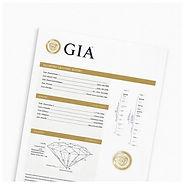
Every GIA-certified diamond is accompanied by an official GIA report outlining
its unique characteristics — including cut, color, clarity, and carat weight.
Many diamonds are also laser inscribed with their GIA report number, discreetly
placed on the girdle.
Can I verify my GIA certificate myself?
Absolutely — and we encourage it.
Each GIA report number can be verified directly through GIA’s online database,
allowing you to independently confirm your diamond’s details at any time.
True luxury never asks for blind trust.
Does GIA certification affect the price?
GIA certification doesn’t inflate value — it protects it.
You’re paying for accuracy, transparency, and confidence, not exaggerated claims
or unclear grading.A certified diamond ensures you’re comparing diamonds honestly,
apples to apples.
Is GIA certification important for insurance or resale?
Yes. Most insurance companies and appraisers prefer — and often require —
GIA documentation for proper valuation, coverage, and long-term peace of mind.
Lab-Grown Diamonds
Not an alternative. A choice
Lab-grown diamonds are real diamonds — chemically, physically, and optically identical to natural diamonds.
What makes them different is how they begin, not how they shine.
How lab-grown diamonds are created
Lab-grown diamonds are grown in controlled environments that
replicate the natural conditions under which diamonds form in the earth.
The result is a diamond with the same brilliance, hardness, and fire —
graded with the same precision when certified by GIA.
Why some clients choose lab-grown
Many clients are drawn to lab-grown diamonds for their:
• Exceptional clarity and color
• Larger presence within the same budget
• Modern, forward-thinking origin
• Responsibly innovative production
When graded by GIA, their beauty is documented with the
same rigor as any natural diamond.
How GIA grades lab-grown diamonds
GIA uses the same scales for cut, color, clarity, and carat weight
when evaluating lab-grown diamonds. Their reports clearly state
the diamond’s origin — ensuring full transparency while maintaining
identical grading standards. No ambiguity. No marketing language. Just facts.
Natural or lab-grown — which is right?
There is no correct answer.
Only the one that feels right to you.
Some clients are drawn to the romance of time and rarity.
Others to innovation, clarity, and possibility.
What matters is this:
Both deserve honesty. Both deserve excellence. Both deserve GIA certification.


The 4-C's


Every diamond — natural or lab-grown — is evaluated using four key factors. Together, they describe a diamond’s beauty, balance, and value.
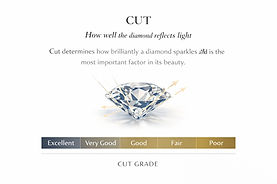
Cut
How light moves through the diamond
Cut is the most important factor in how a diamond looks.
It determines how brilliantly the diamond reflects light — its sparkle, fire, and life.
A well-cut diamond will often appear brighter and more beautiful than a larger diamond with a poor cut.
Color
How white the diamond appears
Diamond color is graded from D (colorless) to Z (noticeable warmth).
Most diamonds appear beautifully white to the eye even in the near-colorless range. Subtle differences are best seen when diamonds are compared side by side.
Clarity
Natural characteristics within the stone
Clarity refers to tiny internal characteristics formed as a diamond grows.
Most clarity features are invisible without magnification and do not affect beauty. Each diamond’s clarity is unique — like a fingerprint.
Carat
How much the diamond weighs
Carat measures weight, not size.
Two diamonds of the same carat weight can look very different depending on cut and proportions.
A balanced diamond will appear larger and more radiant than the number alone suggests.
One Gentle Reminder
The most beautiful diamond is not defined by perfection on paper — but by how it looks and feels to you.
Certification ensures honesty.
Your eye chooses the rest.

